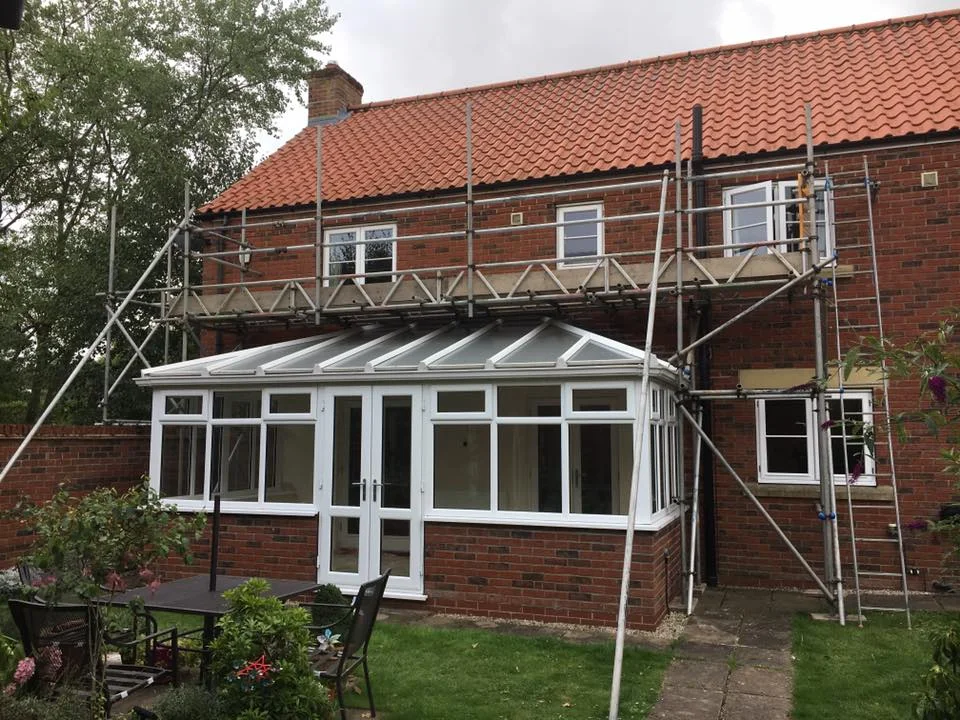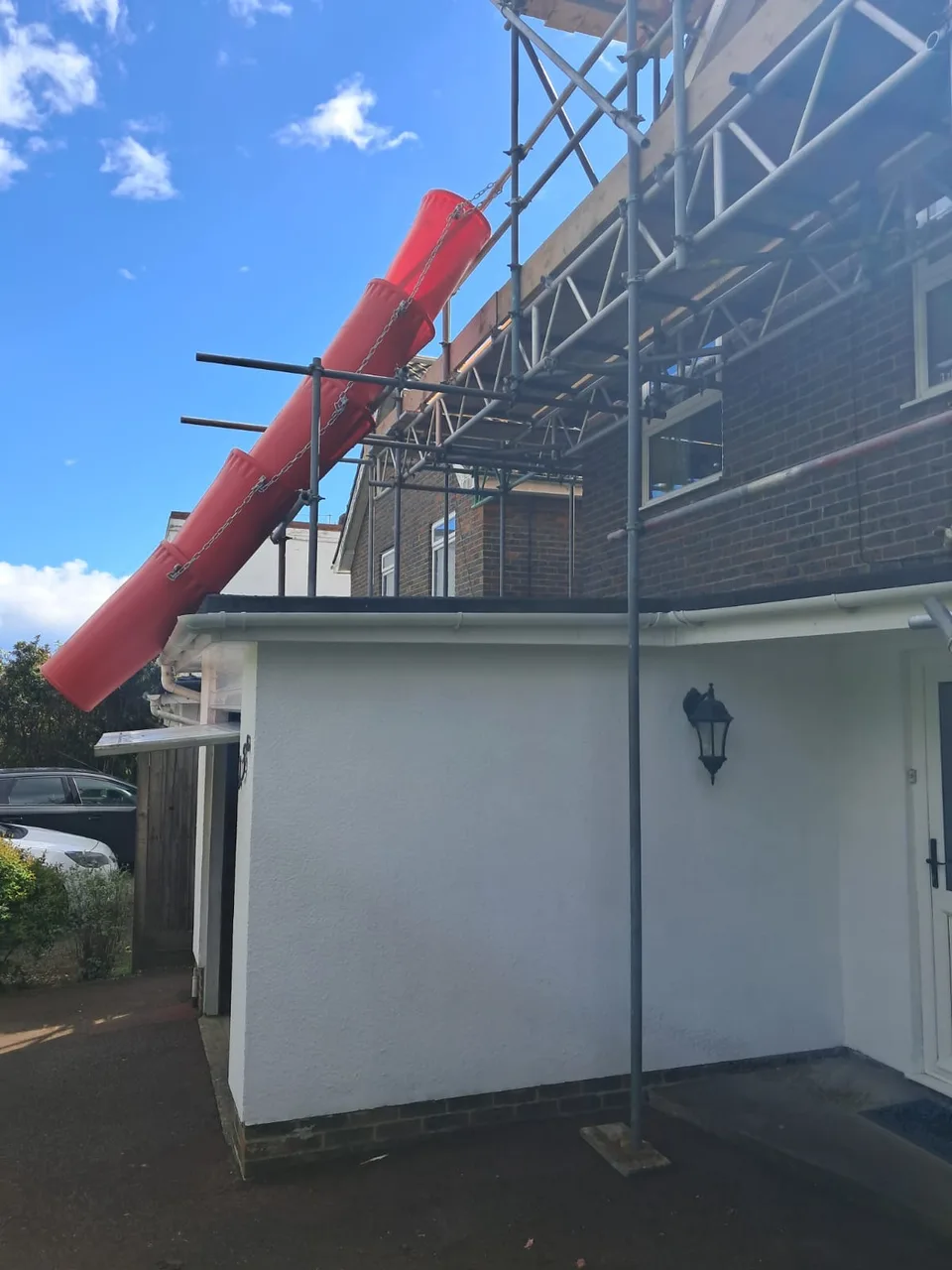
How Much Does Scaffolding Cost in Harrogate?

A Homeowner's Guide (2026)

Scaffolding is one of those project costs that catches a lot of homeowners off guard. You get a quote for rendering, roofing, or exterior painting — and then discover that the scaffolding required to carry out the work adds a significant sum on top of the headline price.

Understanding scaffolding costs before you start planning any exterior home improvement project is genuinely useful. It helps you budget accurately, compare quotes more effectively, and avoid the frustration of unexpected costs once work is underway.

This guide focuses specifically on scaffolding costs in Harrogate and the surrounding area — including Knaresborough, Ripon, Wetherby, and the wider North Yorkshire district. At Sky High Scaffolding, we erect and dismantle scaffolding for homeowners and contractors across the Harrogate area every week, and the figures in this guide reflect what local homeowners are actually paying in 2026.

Quick answer: Scaffolding for a typical semi-detached house in Harrogate costs between £1,000 and £1,800 in 2026, including erection, hire for the duration of the works, and dismantling. Read on for a full breakdown by property type and job.

Why Is Scaffolding Needed?

Scaffolding exists for one primary reason: safety. Any work carried out above head height on the exterior of a building requires a safe, stable working platform for operatives, and a means of safely moving tools, materials, and equipment up and down the structure.

In the UK, the Work at Height Regulations 2005 place a legal duty on contractors to ensure that any work at height is properly planned, appropriately supervised, and carried out using suitable equipment. For most exterior work on a standard residential property above single-storey height, this means scaffolding.

Scaffolding also protects homeowners and members of the public below. Properly erected scaffolding with toe boards and debris netting prevents tools, materials, and debris from falling to ground level — a serious safety consideration on any property with a public pavement, shared driveway, or neighbouring structure nearby.

Some contractors offer alternatives to traditional tube-and-fitting scaffolding for lower-level work — including scaffolding towers, podium steps, and mobile elevating work platforms (MEWPs). These can be appropriate for limited access requirements, but for full-house rendering, roofing, or external wall insulation, traditional scaffolding remains the standard and most cost-effective solution.

What Affects the Cost of Scaffolding in Harrogate?

Scaffolding costs are driven by a number of variables, and understanding these will help you interpret quotes more accurately and identify any areas where savings might be possible.

1. The Size and Height of the Property

The most fundamental driver of scaffolding cost is the amount of scaffold required — which is primarily determined by the size and height of the property. A small bungalow requires far less scaffold than a large three-storey detached house. Scaffold is typically measured in terms of the linear metres of the perimeter being covered and the number of lifts (horizontal working levels) required.

For a standard two-storey semi-detached house, a full scaffold will typically require two lifts — one at first-floor level and one at eaves level. A three-storey property will need a third lift, which adds meaningfully to both material and erection costs.

2. How Many Sides of the Property Need Access

Not every job requires scaffolding on all four sides of a property. For a chimney repair, you might only need a small chimney scaffold. For rendering a single rear elevation, you need access to that elevation only. For a full house render or EWI project, you typically need all-round access, which means a full wrap scaffold.

The number of sides being scaffolded has a direct and significant impact on cost. A single-side scaffold for a rear elevation, for example, will typically cost 30 to 50 percent less than a full four-side wrap on the same property.

3. Access Difficulties

Harrogate has a diverse housing stock, and access conditions vary considerably across the town and surrounding villages. Factors that can increase scaffolding costs include:

  • Narrow side passages that limit the width of scaffold bays

  • Properties set back from the road with long gardens that increase the distance equipment must be carried

  • Steeply sloping ground that requires additional base-levelling work

  • Properties close to busy roads where traffic management may be required

  • Shared driveways or boundary disputes that limit access from one side

  • Trees, overhead lines, or other obstructions that require the scaffold design to be adapted

Any of these factors can add to the erection time — and therefore the cost — of the scaffold. At Sky High Scaffolding, we carry out a full site visit before every quote to identify these issues upfront, so the price you receive is accurate from the start rather than subject to later additions.

4. Duration of Hire

Scaffolding is typically priced to include a standard hire period — usually one to two weeks for a standard residential job. If the works overrun for any reason (bad weather, delays with materials, contractor scheduling), the scaffold will need to remain in place for longer, and additional weekly hire charges will apply.

This is worth understanding clearly before work begins. Always ask your scaffolding contractor what the weekly hire charge will be if the scaffold needs to stay up beyond the agreed period, and factor this into your contingency budget.

5. Pavement Licences and Council Permits

If the scaffold needs to extend over a public pavement — which is common for terraced houses and properties close to the road in Harrogate town centre — a pavement licence will be required from North Yorkshire Council. This is a legal requirement and the cost is typically passed on to the homeowner. Pavement licence fees vary depending on the duration and extent of the encroachment, but typically range from £100 to £400 for a standard residential project. Sky High Scaffolding handles all pavement licence applications on behalf of our customers, taking the administrative burden off your hands entirely.

6. Harrogate’s Premium Market

Harrogate consistently commands higher labour rates than many other parts of Yorkshire. This applies to scaffolding as much as to any other trade. Homeowners in Harrogate should expect to pay 10 to 20 percent more for scaffolding than the Yorkshire regional average — a reflection of local demand, higher business operating costs, and the premium market in which local tradespeople operate.

Scaffolding Costs by Property Type in Harrogate (2026)

The following prices are based on a full scaffold wrap — access to all sides of the property — for the duration of a standard exterior works project. They include erection, standard hire period of up to two weeks, and dismantling. Pavement licence fees are not included where applicable.


Property Type

Typical Duration

Estimated Cost (Harrogate, 2026)

Terraced House (full wrap)

1–2 weeks

£800 – £1,400

Semi-Detached (one or two sides)

1–2 weeks

£1,000 – £1,800

Detached House (full wrap)

2–4 weeks

£1,800 – £3,500

Bungalow (full wrap)

1–2 weeks

£700 – £1,300

Large Detached / Extended Property

3–6 weeks

£3,000 – £6,000+

Three-Storey Townhouse

2–3 weeks

£1,500 – £2,800


These are guide prices for a full scaffold wrap. Single-elevation or partial scaffolds will cost proportionally less. Sky High Scaffolding provides free, no-obligation site-specific quotes for all residential projects across Harrogate and North Yorkshire.

scaffolding-marton-cum-grafton

Scaffolding Weekly Hire Rates in Harrogate

If your project runs longer than the standard hire period included in the initial quote, additional weekly hire charges will apply. Here are typical weekly hire rates for different scaffold configurations in the Harrogate area:

Scaffold Configuration

Typical Weekly Hire Rate (Harrogate)

Single-lift (up to first floor)

£150 – £250 per week

Double-lift (up to second floor)

£220 – £380 per week

Triple-lift (three storeys)

£350 – £550 per week

Full scaffold with boards & handrails

£250 – £450 per week

Chimney scaffold (standalone)

£300 – £600 (flat rate, inc. erect & dismantle)

Scaffold tower (DIY hire)

£60 – £120 per week


Note that weekly hire rates cover the cost of the scaffold remaining in place — they do not include any additional erection or dismantling work. If the scaffold needs to be extended, modified, or adapted during the project, this will typically be charged as a separate item. Sky High Scaffolding will always discuss any changes with you before carrying out additional work and will not alter the agreed price without your approval.

What Does a Scaffolding Quote Include?

When comparing scaffolding quotes, it is important to understand exactly what is and is not included in the price. Here is a clear breakdown of what you should typically expect:


Typically Included in a Scaffold Quote

Typically NOT Included

Erection and dismantling labour

Weekly hire beyond agreed duration

All tubes, boards, and fittings

Scaffold lighting (if required)

Base plates and standards

Netting or sheeting (unless specified)

Handrails and toe boards (safety)

Pavement licence fees (council requirement)

Delivery and collection of equipment

Additional lifts or extensions mid-project

Standard public liability insurance

Debris netting over public areas


One item worth specific attention is debris netting or sheeting. For rendering and EWI projects, debris netting is often required over public areas to prevent materials from falling onto pavements or neighbouring properties. This is not always included in a standard scaffold quote — at Sky High Scaffolding, we always clarify this at the quotation stage so there are no surprises.

Scaffolding Costs by Type of Work

The type of work being carried out affects not just how much scaffold is needed, but how long it needs to stay in place — which directly impacts cost. Here is a guide to typical scaffolding costs for the most common exterior home improvement projects in Harrogate:


Work That Needs Scaffolding

Estimated Scaffolding Cost Contribution

Full house rendering (silicone or monocouche)

£1,000 – £3,500

External wall insulation (EWI)

£1,200 – £4,000

Roof replacement or repair

£1,500 – £5,000+

Chimney repointing or rebuild

£400 – £900

Fascia, soffit & guttering replacement

£800 – £2,000

Full exterior repaint

£900 – £2,500

Window replacement (upper floors)

£600 – £1,500


The figures above represent the scaffolding component of each project only and do not include the cost of the main works themselves. For a full rendering project, for example, the scaffolding cost would be added to the render installation cost to give the total project cost.

Scaffolding-Harrogate-Rear-House

Which Trades Need Scaffolding — and How Sky High Scaffolding Supports Them

Sky High Scaffolding works directly with homeowners booking their own scaffolding, but we also work regularly alongside a wide range of trades who need scaffolding as part of a larger project. Understanding how scaffolding fits into different types of exterior work helps homeowners coordinate their projects more effectively and cost efficiently.

Rendering and External Wall Insulation

Full-house rendering and EWI projects almost always require a full wrap scaffold, as operatives need access to every elevation — including gable ends — to achieve a consistent finish. Attempting to render from a ladder is not only unsafe but produces an unacceptable result on systems like silicone render, which must be applied consistently across each elevation in a single session.

Sky High Scaffolding works regularly alongside rendering contractors across the Harrogate area, coordinating erection and dismantling schedules to minimise downtime and keep projects running smoothly.

Roofing

Roof replacement or significant repair work is one of the most common reasons residential scaffolding is required. A full roof scaffold gives roofers safe, stable access to the entire roof surface, and the ability to move materials and waste safely. For a standard two-storey property, a roof scaffold typically needs to extend above the eaves line — requiring at least two lifts and often a third for taller properties. Harrogate’s stock of Victorian and Edwardian properties, many with steeply pitched roofs and tall chimney stacks, frequently demands more complex and therefore more expensive scaffold configurations.

Chimney Work

Standalone chimney scaffolds — designed to give access to a chimney stack for repointing, rebuilding, or capping — are one of the more specialist configurations Sky High Scaffolding provides. A chimney scaffold must be designed to provide a safe working platform around the full perimeter of the stack without loading the chimney structure itself. For the tall, ornate chimney stacks common on Victorian Harrogate properties, this requires careful planning and experienced erection.

Fascia, Soffit, and Guttering

Replacement of fascia boards, soffits, and guttering is one of the most common reasons homeowners arrange scaffolding independently of a main contractor. Access to the roofline is required for the full perimeter of the property, typically at eaves level only — meaning a single-lift scaffold is usually sufficient. This is often one of the more cost-effective scaffolding configurations, making it a good opportunity to combine with other trades if additional work is planned at the same time.

Window Replacement

Upper-floor window replacement often requires scaffolding, particularly where windows are large, heavy, or in a location that makes crane or MEWP access impractical. For properties with first-floor bay windows — common across Harrogate — a scaffold that provides safe loading and offloading space for window frames is essential. Sky High Scaffolding can design bespoke scaffold configurations for window replacement projects of all sizes.

How to Save Money on Scaffolding: Combining Jobs and Sharing Costs

Scaffolding is a fixed-overhead cost — the erection and dismantling charges are essentially the same regardless of how many trades use the scaffold while it is in place. This means that combining multiple exterior jobs under a single scaffold hire is one of the most effective ways to reduce the overall cost of scaffolding across your projects.

Combining multiple trades under one scaffold

If you are planning to have rendering done alongside guttering replacement, window work, or any other exterior trade, discuss with your contractors whether all the work can be coordinated under a single scaffold hire. Rather than paying for the scaffold to be erected, used, and taken down multiple times, you pay once for erection and dismantling, and the trades complete their work in sequence while the scaffold is in place. The saving compared to separate scaffold hires for each job can run to several hundred pounds.

Sky High Scaffolding is experienced in coordinating multi-trade scaffolds across Harrogate and can work with your main contractor and other trades to plan an efficient scaffold programme that minimises cost and disruption.

Sharing scaffolding with a neighbour

In terraced and semi-detached properties, there is sometimes an opportunity to share scaffolding costs with an immediate neighbour if both properties need similar work at the same time. A shared scaffold covering both properties can be erected for a combined cost that is meaningfully less than two separate scaffolds — saving both homeowners money on erection, hire, and dismantling.

This requires a degree of coordination and agreement between both homeowners and their respective contractors, but it is well worth exploring. Sky High Scaffolding has facilitated shared scaffold arrangements for neighbouring properties on multiple occasions across Yorkshire, and we are happy to help coordinate this where the opportunity exists.

Scaffolding-Wetherby-Back-House

Scaffolding in Harrogate: Local Considerations

Harrogate’s built environment presents some specific considerations for scaffolding that are worth understanding if you are planning exterior works on a property in the town or surrounding villages.

Victorian and Edwardian Properties

A significant proportion of Harrogate’s housing stock dates from the Victorian and Edwardian periods — characterised by tall, narrow properties with steeply pitched roofs, prominent chimney stacks, and decorative bay windows. These architectural features all have implications for scaffolding design and cost.

Tall Victorian terraces in areas such as Duchy Road, Kings Road, and the streets surrounding the Valley Gardens often require three-lift scaffolds due to their height, with additional considerations for chimney access and bay window detailing. Homeowners with these property types should budget at the higher end of the ranges in this guide. Sky High Scaffolding has extensive experience with Harrogate’s period housing stock and designs scaffolds that provide safe, practical access while respecting the character of the buildings involved.

Conservation Areas

Parts of central Harrogate are designated as conservation areas, including significant portions of the town centre and some of the most distinctive residential streets. While scaffolding itself does not typically require planning permission, any works to the exterior of a property within a conservation area may require prior approval — and the scaffolding contractor needs to be aware of any restrictions on how the scaffold is erected and what it can be attached to.

If your property is in a Harrogate conservation area, Sky High Scaffolding can advise on the appropriate approach and liaise with North Yorkshire Council as necessary to ensure full compliance before work begins.

Harrogate Town Centre and Busy Roads

Properties in and around Harrogate town centre, on main roads such as the A61 or A59 corridors, or on busy residential streets present access and traffic management considerations that can add to scaffolding costs. Pavement licences are almost always required for town centre properties, and some locations may need a traffic management plan or banksman provision while the scaffold is erected and dismantled.

The Harrogate district’s busy tourist season — which brings significant footfall to the town centre from spring through autumn — can also make access planning more complex during peak periods. Sky High Scaffolding is familiar with the demands of working in busy Harrogate locations and plans every project with the surrounding environment in mind.

Villages Around Harrogate

Sky High Scaffolding covers the full North Yorkshire area surrounding Harrogate, including Knaresborough, Boroughbridge, Pateley Bridge, Masham, and Ripon. Scaffolding costs in these locations are generally somewhat lower than in Harrogate town itself, reflecting the less complex access environment. However, travel time to more remote village locations can be a factor for smaller jobs — something we always take into account when providing quotations for village properties.

Scaffolding-Bramhope

How to Get the Best Value from Scaffolding in Harrogate

Scaffolding is a necessary cost for most exterior home improvement projects, but there are sensible ways to ensure you are getting good value without compromising on safety or quality:

  • Always get a site-specific quote rather than relying on online calculators or phone estimates — the variables involved in scaffolding pricing mean that an accurate quote is only possible after a proper site visit.

  • Understand exactly what is included in the price before you commit — particularly the standard hire period, the weekly rate beyond that, and whether items like pavement licences and debris netting are covered.

  • Consider combining multiple exterior works under a single scaffold hire. If you need rendering, guttering, and fascia work done, coordinating all three under a single scaffold erection can deliver meaningful savings.

  • Explore sharing scaffold costs with a neighbour if you are in a terrace or semi-detached property and your neighbour has similar work planned.

  • Avoid booking scaffolding for longer than you need it. Confirm realistic project timescales with your main contractor before the scaffold is erected, and build in a sensible contingency rather than leaving the scaffold up indefinitely.

  • Use a NASC-registered scaffolding contractor where possible. The National Access and Scaffolding Confederation (NASC) operates a register of vetted, accredited scaffolding contractors. Accreditation confirms that the contractor meets defined standards for safety, training, and insurance.

  • Confirm that the scaffolding contractor carries adequate public liability insurance — a minimum of £5 million is standard for residential work. Always ask for a copy of the insurance certificate before work begins.

Red Flags to Watch Out For

As with any trade, there are warning signs that should give you pause when commissioning scaffolding work. These include:

  • No site visit before quoting — scaffolding cannot be accurately quoted without a site inspection. Any contractor providing a firm price without visiting the property is guessing, and you will likely face additional charges once work begins.

  • Unusually low prices — scaffolding that is significantly cheaper than comparable quotes may indicate the use of substandard or poorly maintained equipment, inadequate safety provisions, or a contractor who is not properly insured. Safety is not an area where cutting costs is ever appropriate.

  • No written contract or confirmation — always insist on a written quote that specifies the configuration, the hire period, the weekly hire rate beyond that period, and what is included and excluded from the price.

  • Pressure to pay in full upfront — a standard payment arrangement for scaffolding is a deposit on booking with the balance due on completion or on erection. Demanding full payment in advance before any work has started is not standard practice.

  • No mention of a pavement licence where one is clearly required — if your property is close to a public pavement and the contractor has not raised the question of a pavement licence, ask directly. Erecting a scaffold over a public pavement without the required council licence is a legal matter that the homeowner may ultimately be held responsible for.

  • No evidence of insurance or accreditation — a legitimate, professional scaffolding contractor will be happy to provide copies of their public liability insurance and any relevant accreditation without hesitation. Reluctance to do so is a significant warning sign.

Frequently Asked Questions

Do I need planning permission for scaffolding in Harrogate?

In most cases, no — scaffolding on a residential property does not require planning permission. However, if the scaffold extends over a public pavement or highway, a licence from North Yorkshire Council is required. This is not a planning permission but a separate highway licence that controls the use of public space. Sky High Scaffolding handles all pavement licence applications as part of our service, so you do not need to deal with the council directly. In conservation areas and on listed buildings, some additional constraints may apply — we will advise you on these during your site survey.

How long can scaffolding stay up on a house?

There is no absolute legal time limit on how long scaffolding can remain on a residential property, but most scaffold hire arrangements are based on a standard period of one to two weeks, with weekly hire charges applying beyond that. From a practical perspective, leaving scaffolding in place for extended periods can cause problems with insurers, neighbours, and the local council — particularly if it becomes a security risk or begins to deteriorate. If your project is likely to take longer than a few weeks, discuss this with Sky High Scaffolding and your main contractor at the outset so the hire arrangement can be planned accordingly.

Can I erect scaffolding myself to save money?

Technically, homeowners can erect their own scaffolding, but this is strongly inadvisable. Scaffolding erection is a skilled, regulated activity that requires training, experience, and the right equipment to carry out safely. Incorrectly erected scaffolding is one of the most common causes of serious injury on residential properties. The potential cost saving is not worth the risk — both to your own safety and to the safety of others. If you are looking to reduce scaffolding costs, focus on the strategies outlined above — particularly combining jobs and sharing costs with neighbours.

Who is responsible if scaffolding causes damage?

Responsibility for any damage caused by scaffolding — whether to your own property, a neighbouring property, or a member of the public — depends on the circumstances and how the damage occurred. A properly insured scaffolding contractor carries public liability insurance that covers damage caused by the scaffold or its erection and dismantling. Sky High Scaffolding holds comprehensive public liability cover, and we are happy to provide our insurance certificate on request. Always retain a copy of your contractor’s insurance documentation before any work begins.

Can I use a scaffold tower instead of full scaffolding?

For limited, low-level access requirements, a scaffold tower can be an appropriate and more cost-effective alternative to full tube-and-fitting scaffolding. Mobile aluminium scaffold towers can be hired for as little as £60 to £120 per week and are suitable for tasks such as painting ground-floor elevations, cleaning gutters, or carrying out localised work at low level. However, for any substantial work at height — including full-house rendering, roofing, or EWI — a proper scaffold structure is required. Scaffold towers are not appropriate for these applications, and using them as a cost-cutting substitute creates a genuine safety risk.

What happens if the scaffolding is damaged during the works?

Any damage to scaffolding caused by a main contractor’s operatives during the course of the works is typically the responsibility of that contractor to repair and make good. Your scaffolding contract should be clear on this point. Sky High Scaffolding recommends that homeowners walk around the scaffold with us and with their main contractor at the start of the project to note any pre-existing condition, and again at completion before the scaffold is struck — this protects all parties in the event of any dispute.

How far in advance do I need to book scaffolding in Harrogate?

During peak season — spring and summer, when exterior work is most in demand — it is advisable to book scaffolding at least two to four weeks in advance to ensure availability. During quieter periods in autumn and winter, we can often accommodate shorter notice. Sky High Scaffolding recommends getting in touch as early as possible in your project planning so we can confirm availability and factor scaffolding timing into the overall project programme.

Need Scaffolding in Harrogate? Talk to Sky High Scaffolding

f you are planning exterior works on your Harrogate property — whether that is rendering, roofing, chimney work, guttering, or any other project that requires access at height — Sky High Scaffolding is here to help.

We are a local, Harrogate-based scaffolding company serving homeowners and contractors across the North Yorkshire area. Every project begins with a free, no-obligation site survey so we can understand the specific requirements of your property and provide an accurate, fully itemised quotation. We carry comprehensive public liability insurance, handle all pavement licence applications on your behalf, and work around your schedule to minimise disruption.

We also work closely with rendering, roofing, and other exterior trades across the Harrogate district — so if you are coordinating a multi-trade project, we are well placed to help you plan your scaffold programme efficiently and cost effectively.

Get in touch with Sky High Scaffolding today for a free site survey and no-obligation quotation. We cover Harrogate, Knaresborough, Ripon, Wetherby, and all surrounding areas across North Yorkshire.

About the Author

Sky High Scaffolding | Scaffolding Specialists, Harrogate & North Yorkshire

This article was written by Sky High Scaffolding, specialists in residential and commercial scaffolding across Harrogate and the wider North Yorkshire area.

Sky High Scaffolding provides safe, reliable scaffolding for homeowners and contractors across Harrogate, Knaresborough, Ripon, Wetherby, and North Yorkshire. We offer free site surveys, fully itemised quotations, and handle all pavement licence applications on your behalf.

Learn more at www.skyhighscaffolding.co.uk

Sky-High-Scaffolding-banner